Title:
UK Food Inflation Cools: Price Pressures Ease and Bank of England Monetary Policy Challenges
Keywords:
UK food inflation, BRC, Bank of England, retail prices, CPI, energy prices, monetary policy, core inflation
Introduction
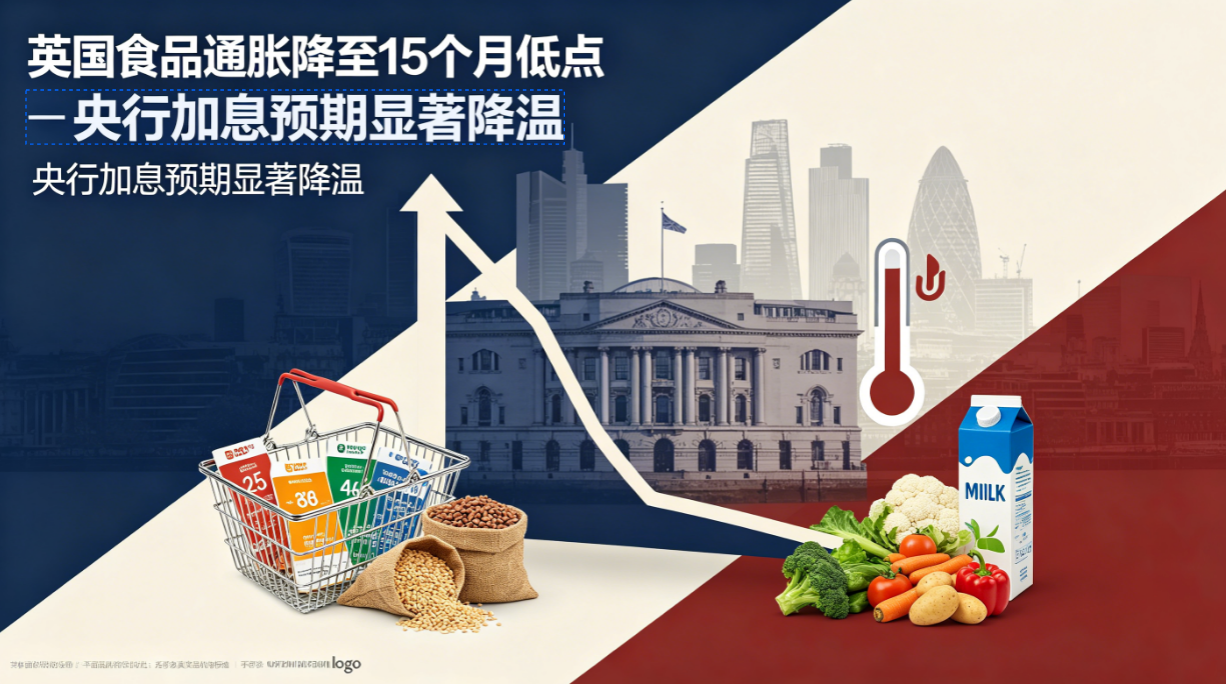
The latest data from the British Retail Consortium (BRC) sent an important signal for the UK macro outlook: food inflation fell to 2.4% in early June, a 15-month low. The decline from 2.7% in the previous month not only reflects that price pressures in the consumer basket are easing, but also indicates that the UK price level is entering a more stable phase after experiencing supply chain disruptions, soaring energy costs, and imported inflation shocks.
Notably, although food inflation has slowed, overall retail price inflation remains at 1.2%. While this level is far below the previous high-pressure period, it still does not fully meet the Bank of England's 2% medium-term inflation target. Therefore, financial markets are revising expectations: the likelihood of another rate hike this year has dropped significantly, but questions remain about when and to what extent policy will be eased or kept unchanged.
1. Food Inflation Declines: A Signal of Supply-Side Cooling
According to BRC data, the main reason for the decline in food inflation is the downward movement in fresh food prices. This is important because fresh food prices typically quickly reflect supply conditions, seasonal factors, and logistics costs. When harvests are good, supply is abundant, and input cost pressures ease, retailers have more room to pass on these benefits to consumers.
For the UK, this slowdown is not due to a single factor but is the result of multiple supply-side forces. First, favorable weather and seasonal factors supported domestic crop output. Second, fierce competition among retail chains forces companies to maintain attractive prices for consumers. Third, summer items such as strawberries, ice cream, and some fresh products are priced relatively low to stimulate demand and help stabilize the overall food price level.
From an inflation economics perspective, this looks more like cost pressure relief than a pure demand collapse. In other words, prices are falling or rising more slowly, more because of supply improvement, not necessarily implying a sharp contraction in consumer demand. This distinction is important for policy making: demand-driven inflation is usually accompanied by more pronounced growth slowdown risks, while inflation reduction driven by supply improvement is more benign for both consumers and policy makers.
2. The Role of Energy Prices and the International Background
Another factor underpinning the easing of UK price pressures is the more favorable international backdrop, especially the decline in global oil prices. The report states that a preliminary peace agreement between the US and Iran pushed oil prices down. Although the impact of such geopolitical events usually takes time to fully transmit to the real economy, energy markets tend to react quickly to expectations of supply and disruption risks.
For an energy-importing economy like the UK, lower oil prices have both direct and indirect effects. Directly, it reduces costs for fuel, transportation, and distribution; indirectly, it eases inflation expectations for businesses and households, reducing the pressure to raise selling prices. When energy prices stabilize or decline, energy-intensive industries such as logistics, food processing, retail, and transportation face lighter cost burdens, creating positive spillover effects along the price chain.
The combination of falling food inflation and weak energy prices makes the current pricing environment calmer than in previous quarters. This is also an important reason why markets have begun to believe that the UK monetary tightening cycle may be near its peak, or at least no longer requires as strong a response as before.
3. Money Market Revises Expectations: From Multiple Rate Hikes to Possible No Hike
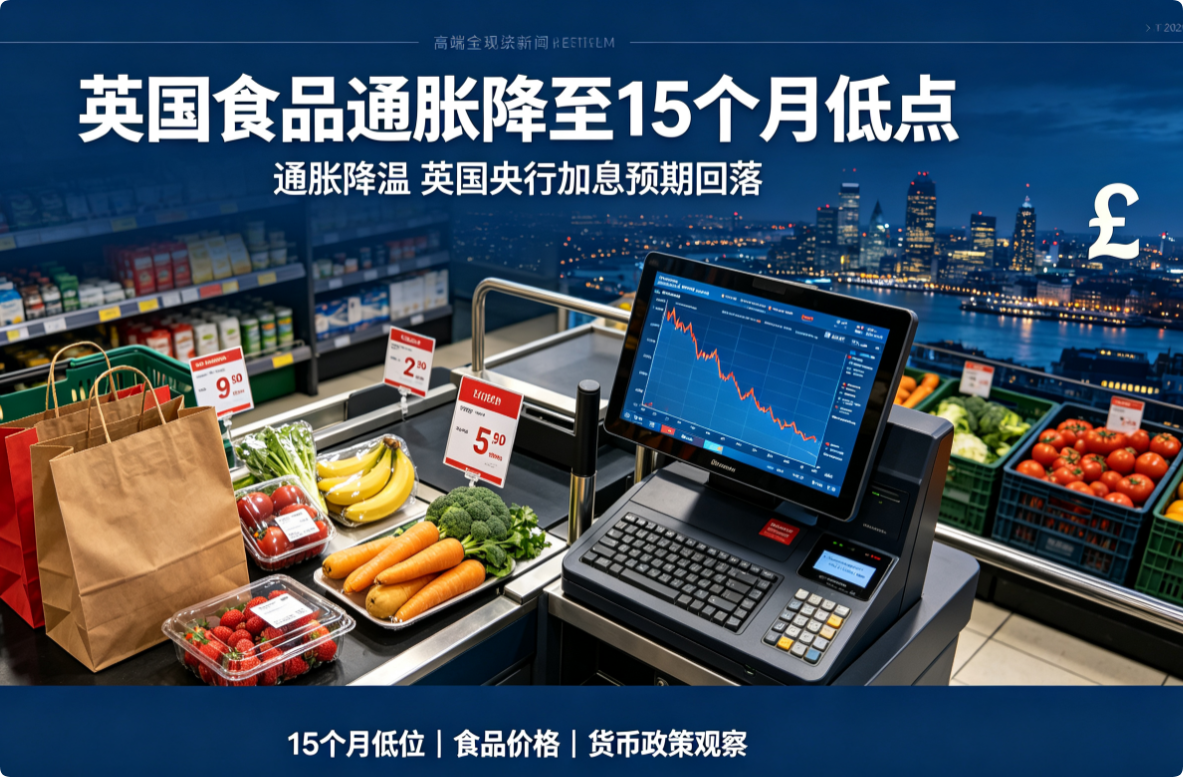
Earlier, traders had priced in the possibility of the Bank of England raising rates three to four times by 25 basis points each this year. This expectation reflected concerns about persistent inflation, especially as food prices, services prices, and wages continued to put pressure on the price level. However, the latest BRC data has forced markets to downplay confidence in a strong rate hike scenario.
The change in expectations is understandable. In asset pricing, markets do not react only to a single data reading but to trends and their persistence. When food inflation continues to decline and overall retail price inflation is clearly lower than in previous periods, investors naturally ask: Is this the beginning of sustained cooling, or just seasonal noise?
If subsequent data continue to confirm this downward trend, the Bank of England's policy path could adjust faster than expected. But this does not mean the central bank will rush to ease. Instead, it will want to see stable improvement in more stubborn parts of inflation, especially core services inflation and wage growth.
4. Why Falling Food Inflation Is Not Yet a Victory
Although 2.4% is the lowest level in 15 months, considering the Bank of England's 2% inflation target, this level cannot yet be considered fully safe. More importantly, food inflation is only part of the overall picture. Monetary policy is not determined by a single commodity category but is shaped by the full inflation structure, including services prices, housing costs, wages, and inflation expectations.
In the UK, services inflation is usually stickier than goods inflation. This is because labor costs account for a larger share, and once wages rise, adjustments are often slow and difficult to push back down. If wage growth remains high, companies will face margin pressure and may pass on some of the pressure through price increases in less competitive industries. Therefore, despite food prices moderating, the Bank of England will still need to closely watch wage data and services inflation before changing its policy stance.
It is also necessary to distinguish between "slowing inflation" and "falling prices." In many cases, a falling inflation rate does not mean prices return to past levels; it only means prices are rising more slowly. This means household purchasing power may still be eroded, especially for lower-income groups who spend a larger share of their budget on food and energy. Therefore, the social impact of cooling inflation will not be immediate and may not be evenly distributed across income groups.
5. Implications for the Bank of England
From a monetary policy perspective, the current data puts the Bank of England in a difficult but more flexible position. If rates are kept too high for too long while price pressures have already cooled, the central bank risks stifling growth and weakening consumption and investment prospects. On the other hand, if it eases too early before core inflation is fully under control, it could reignite price expectations and damage policy credibility.
Therefore, the most sensible approach is to adopt a more data-dependent stance. The Bank of England is likely to focus on three key variables:
- Core inflation, especially services inflation;
- Nominal wages, to assess labor cost pressures;
- Business and household inflation expectations, to judge the degree of embedded price pressures.
In this context, the market no longer fully pricing in another rate hike this year is a reasonable reaction. Nevertheless, it is still too early to declare the rate hike cycle completely over. If subsequent CPI data show stubborn services or core prices, the Bank of England could still be more hawkish than markets expect.
6. Official CPI Will Be the Next Test
A key point is that the BRC measures retail prices in the market, while the official Consumer Price Index (CPI) is the indicator directly used by policymakers. The two sets of data are closely related but not identical, as they differ in basket composition, weights, and statistical methodology.
Therefore, the market is now waiting for CPI to confirm whether the cooling trend seen in retail prices has indeed spread to the broader economy. If CPI continues to fall, rate hike expectations will narrow further, possibly shifting to expectations of rates staying unchanged or even later cuts. If CPI turns out to be more stubborn than expected, markets will have to reprice the entire rate curve, and the Bank of England will likely maintain a cautious stance.
At this stage, each economic data release is more directional than usual. After a period of high inflation, even small price signals can trigger significant movements in asset pricing, exchange rates, and bond markets.
Conclusion
The decline in UK food inflation to 2.4% is a noteworthy signal, indicating that price pressures are continuing to ease thanks to supply improvements, intensified retail competition, and a more stable energy environment. This has also led to a sharp drop in market expectations for another Bank of England rate hike this year.
However, the overall picture is not yet sufficient to say that inflation is fully under control. Retail price inflation of 1.2% is still above the long-term target, while services inflation, wages, and official CPI remain key variables to watch. In summary, the UK is entering a transition phase: from aggressive inflation control to assessing how durable the disinflation process is.
In other words, this data release is not just about slower food price rises; it also serves as an important test for the entire UK monetary policy cycle in the coming months. If CPI and core indicators confirm the cooling trend, the Bank of England will have more room to shift to a more neutral stance; otherwise, markets may need to prepare for a longer period of cautious monetary policy.