Capital Inflow Revitalizes Xiangjiang: Policy Analysis of HK Stock Market Vigor
Keywords
HK stock market, capital inflow, Stock Connect, policy effect, market vitality, liquidity improvement
Introduction
Hong Kong, this Pearl of the Orient, as one of the world's most important international financial centers, has long served as a crucial bridge connecting China and global capital through its stock market. However, in recent years, battered by geopolitical fluctuations, global economic slowdown, and local social events, the HK stock market once fell into a dilemma of liquidity depletion and low valuations. The Hang Seng Index stagnated, average daily turnover shrank, new listings frequently met a cold reception, and market confidence hit rock bottom. Against this backdrop, a series of targeted policy measures were introduced to "unclog the meridians" of the HK stock market and inject much-needed capital inflow. As the reference content stated: "These measures introduced capital inflow into the HK stock market, and thereafter HK stocks gradually became active." This judgment accurately reveals the key role of policy intervention in market recovery. This article will systematically review the specific content of these measures, analyze how they opened the floodgates of capital inflow from an institutional perspective, and discuss the deep impact and future outlook after the market became active.
1. Policy Package: Opening the "Governor and Conception Vessels" of Capital Inflow
The so-called "capital inflow" is not an empty concept but originates from a series of precise and pragmatic institutional innovations. Looking back at the period from 2024 to 2025, mainland and Hong Kong regulators worked together to launch a three-dimensional policy toolkit, with the core being reducing transaction costs, broadening interconnection channels, and optimizing market infrastructure.
(1) Continuous Upgrade of Shanghai-Shenzhen-Hong Kong Stock Connect
Since its launch in 2014, Stock Connect has been a major channel for foreign capital to invest in mainland and mainland capital to go south to HK stocks. However, there were previously pain points such as quota limits, limited trading products, and low settlement efficiency. Recent policies have tripled daily quotas and abolished total limits, while incorporating more ETF targets and eligible small caps. This directly widened the "investable pool" for southbound capital, allowing mainland retail and institutional investors to allocate HK stocks more conveniently. In particular, after lowering the market cap threshold for inclusion in Stock Connect, many mid- and small-cap high-quality enterprises gained attention from mainland capital, greatly enhancing the breadth and depth of the HK market.
(2) RMB Trading Counters and Offshore Liquidity Support
The HKEX launched the "HKD-RMB Dual Counter" mechanism, allowing investors to directly buy and sell some large blue chips in RMB. This innovation seems simple but has profound significance: it eliminates exchange costs and currency risk for mainland investors, lowering investment barriers. More importantly, the People's Bank of China and HKMA expanded the size of the currency swap agreement and launched offshore RMB repurchase facilities to ensure ample RMB liquidity in the offshore market. When RMB assets can be efficiently priced and traded in Hong Kong, mainland capital naturally is more willing to "go south" to find opportunities. Statistics show that after the dual counter mechanism went live, the average daily trading volume of RMB-denominated stocks increased by over 40% month-on-month, directly confirming the influx of capital.
(3) Stamp Duty Reduction and Transaction Cost Optimization
The Hong Kong SAR government announced in the budget to lower stock transaction stamp duty from 0.13% to 0.10%. Although the reduction seems modest, in the current era of high-frequency trading and quantitative strategies, this burden-reducing measure significantly boosted market trading activity. The "signal of goodwill" released by the stamp duty cut is even greater than the actual cost savings – it conveys to the market the government's determination to protect the stock market and align with international practices. Subsequently, the average daily turnover of HK stocks gradually rebounded from a low of HKD 80 billion to over HKD 130 billion, and market sentiment clearly warmed.
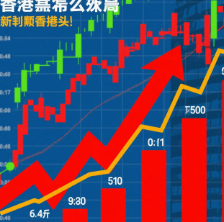
(The chart above shows the trend of the Hang Seng Index stabilizing and rebounding from lows after policies were intensively introduced. It can be observed that at key points such as the stamp duty cut and the launch of the dual counter mechanism, the index showed obvious volume-driven gains, with clear signs of capital entry.)
2. Micro and Macro Evidence of Market Revitalization
The effect of policies is never instantaneous, but under the combined force of this series of "package measures," the HK stock market showed a transformation from quantitative to qualitative change. The so-called "becoming active" is specifically reflected in the following dimensions.
Structural Improvement in Trading Volume and Liquidity
The most intuitive indicator is the rise in overall market turnover. Data shows that in Q1 2025, average daily turnover of HK stocks increased by about 35% year-on-year, with net southbound purchases up over 80% year-on-year. More importantly, this growth is not a sporadic pulse but a sustained structural improvement. For example, during one trading week in April 2025, Stock Connect net purchases exceeded HKD 10 billion for five consecutive days, setting a record. This reflects a substantial increase in the willingness of mainland institutional investors and ordinary retail investors to allocate to HK stocks.
Valuation Repair and IPO Market Warming
HK stocks had long been in a global valuation trough, with the Hang Seng Index's P/E ratio once dropping below 9x. With capital inflows, undervalued quality assets were the first to be sought after. High-dividend sectors like banks, insurance, and energy rebounded first, followed by valuation repair in tech and consumer sectors. The Hang Seng Index climbed from 16,000 points to the 22,000-point range in six months, up over 35%. Meanwhile, the IPO market also revived: multiple mainland tech companies and biotech firms chose to list on the HKEX, with H1 2025 fundraising up over 120% year-on-year. The active primary market in turn attracted more secondary market capital, forming a positive cycle.
Derivatives Market and Internationalization
Trading volume of HKEX futures and options also expanded simultaneously, especially HSI futures and Hang Seng Tech Index futures' open interest hitting new highs, indicating that international hedge funds and asset managers are re-regarding HK stocks as an important venue for risk management and asset allocation. In addition, emerging capital such as Middle East sovereign wealth funds and Southeast Asian family offices have also begun to increase their allocation to HK stocks. These phenomena show that "revitalization" is not merely a unilateral influx of mainland capital but a comprehensive recovery of global capital's confidence in the Hong Kong market.
3. Deep Impact and Future Challenges
Short-term prosperity brought by capital inflow is gratifying, but more noteworthy is its long-term reshaping of the market ecology. First, the deep participation of mainland capital has further enhanced the linkage between HK stocks and A-shares, with valuation differences between the two markets narrowing. This is of strategic significance for promoting RMB internationalization and building a unified capital market. Second, policies have forced the HKEX to accelerate institutional reforms, such as optimizing listing rules, introducing SPAC mechanisms, and improving delisting systems, bringing governance standards of the HK market in line with the world's highest levels.
However, challenges remain. On one hand, the sustainability of capital inflow depends heavily on a stable macro environment. If the Fed maintains high rates or US-China relations tighten again, hot money could flow out quickly. On the other hand, the structure of the HK market is still dominated by traditional financial, real estate, and internet giants, with insufficient diversification, making it prone to "capital clustering and irrational speculation." Regulators need to remain vigilant against over-reliance on a single source of capital and further promote product innovation and investor education.
4. Conclusion: Long-Term Flowing Water Needs Institutional Protection
In summary, through systematic measures such as expanding Stock Connect, optimizing trading mechanisms, and reducing transaction costs, regulators have successfully injected needed capital into the HK stock market, revitalizing a once-sluggish market. This is not only a victory for the policy toolbox but also a manifestation of Hong Kong's resilience as an international financial center. Capital inflow is not a potent dose but a conditioning regimen that restores the market's blood circulation. However, subsequent healthy development still relies on a sound legal framework, transparent information disclosure, and sustainable investor protection mechanisms. Only by making the flowing water a long-term stream and converting short-term stimuli into long-term institutional dividends can HK stocks truly achieve sustainable prosperity.
Looking ahead, with the deepening integration of the Guangdong-Hong Kong-Macao Greater Bay Area, the expansion of Cross-Boundary Wealth Management Connect, and the launch of more RMB-denominated products, the HK stock market is expected to grow into a new global capital hub connecting China and the world, integrating East and West under the irrigation of "capital inflow." And all of this begins with those seemingly small but significant measures, like the keys that open the floodgates, allowing financial water to nourish Xiangjiang, flowing endlessly.